

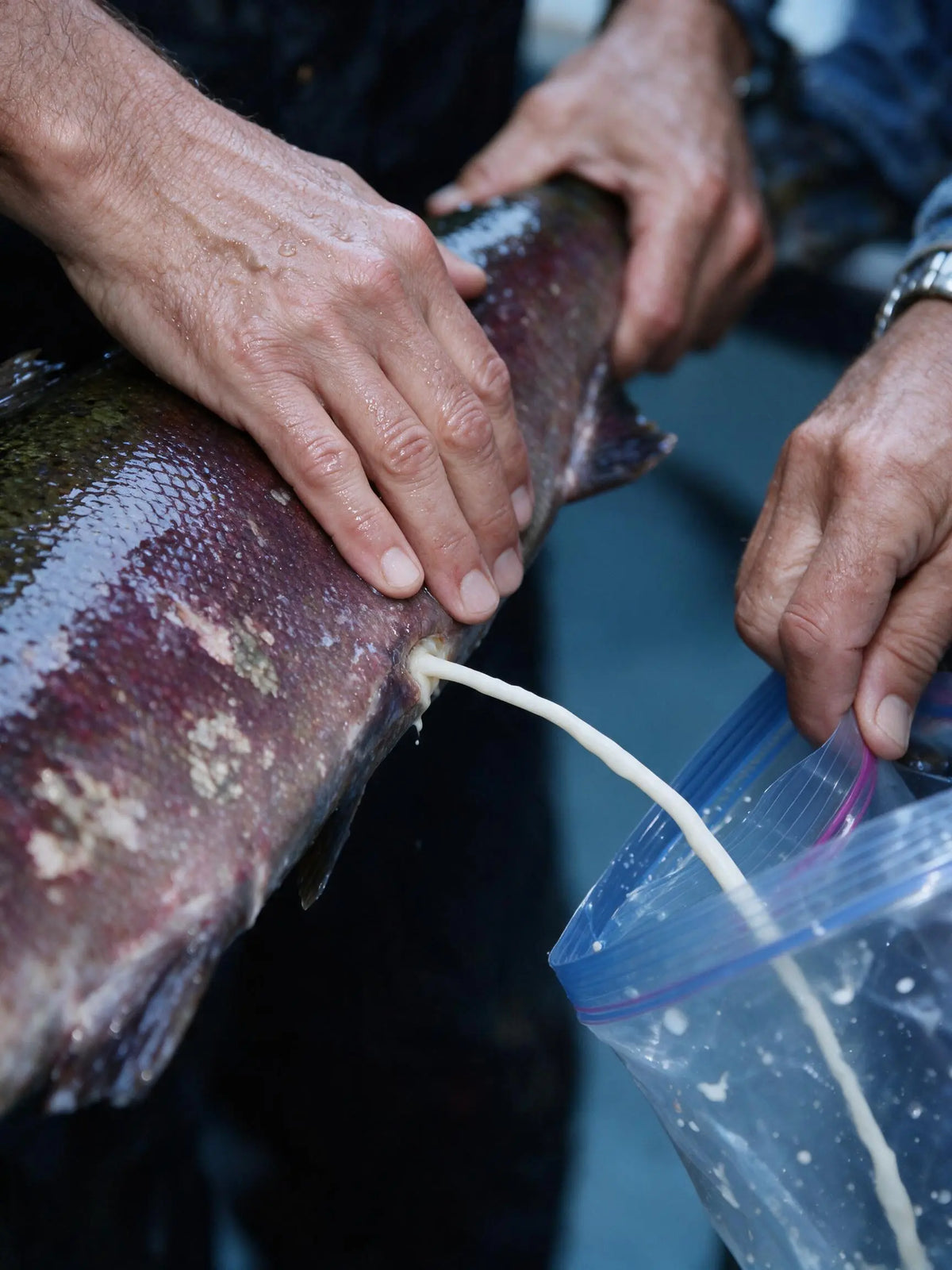
stands for polydeoxyribonucleotide. It's DNA fragments, obtained from the milt of salmon or trout. The INCI on skincare is usually Sodium DNA.
KNOWLEDGE · PDRN in K-Beauty, what it can & can’t actually do in skincare
INGREDIENTS EXPLAINED
PDRN in K-Beauty, what it can and can’t actually do in skincare
5 min read · 15 August 2026
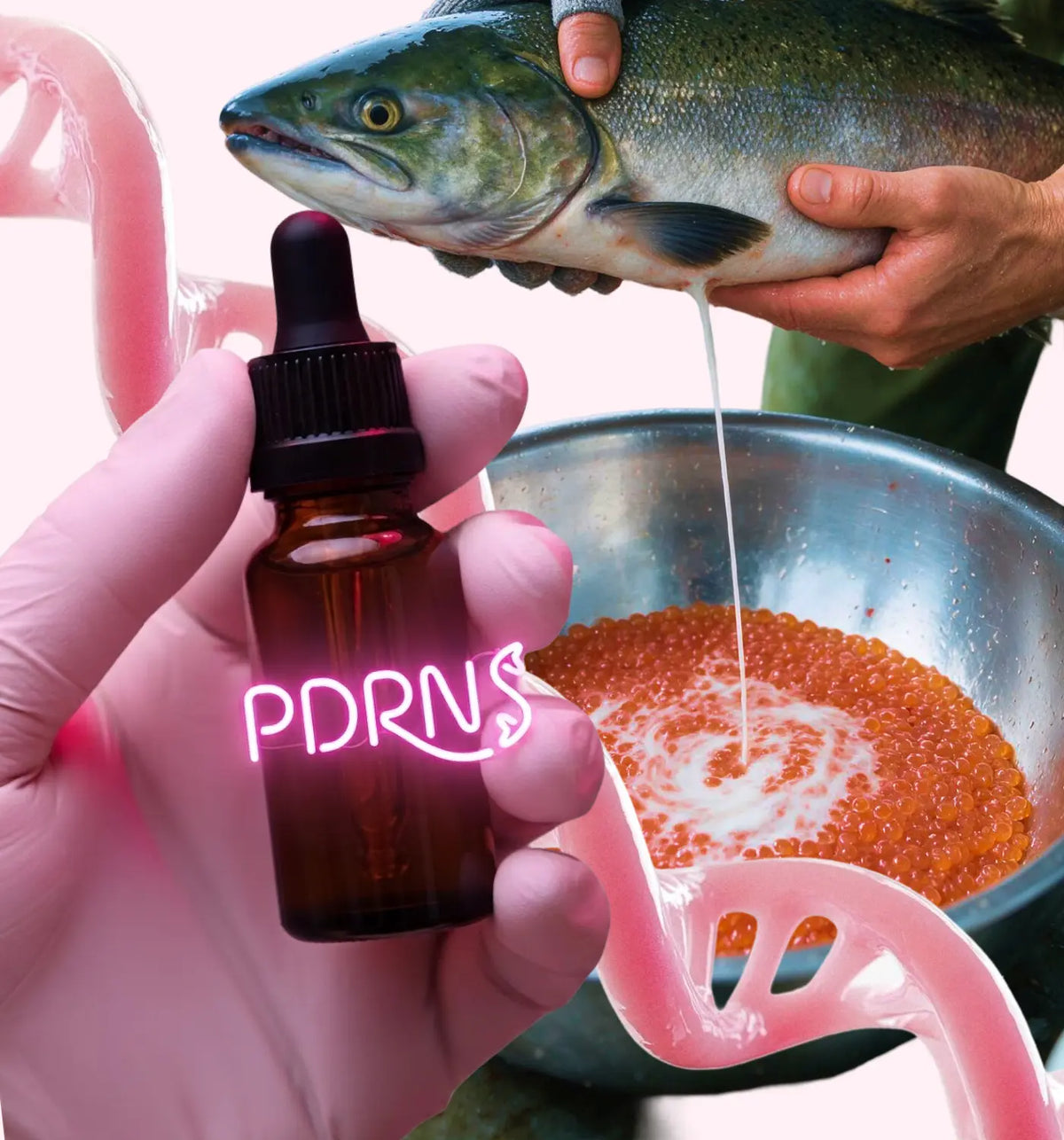
You've probably already seen PDRN on social media. PDRN is meant to speed up the skin's own repair process: more collagen and flawless skin.
The question is how much of that is research and how much is marketing? And do we have alternatives to the salmon sperm ingredient?
What is PDRN? The Salmon Skincare Trend Explained.
If you’re only want to use skincare that is not derived from animals, then we suggest you stop reading here, and directly drop to our plant alternative section, because PDRN consists of DNA fragments mainly derived from the sperm cells of salmon or trout.
PDRN
What's in it:
Deoxyribonucleotide chains, the active ingredient itself.
Proteins and peptides are stripped out of the raw material so the immune system doesn't react to it.
What appears on the ingredient list as "Sodium DNA" tells you nothing about chain length, purity or amount. Or how it was produced exactly.
*AI illustration of how salmon milt is harvested.
Where does the hype around this ingredient come from?
It starts in Italy, not in Korea. The first PDRN was a prescription drug, made from human placenta and approved for scars and skin atrophy. The source later switched to salmon. Korea picks it up as an injectable around 2014, and only then does PDRN move into creams, serums and powders.
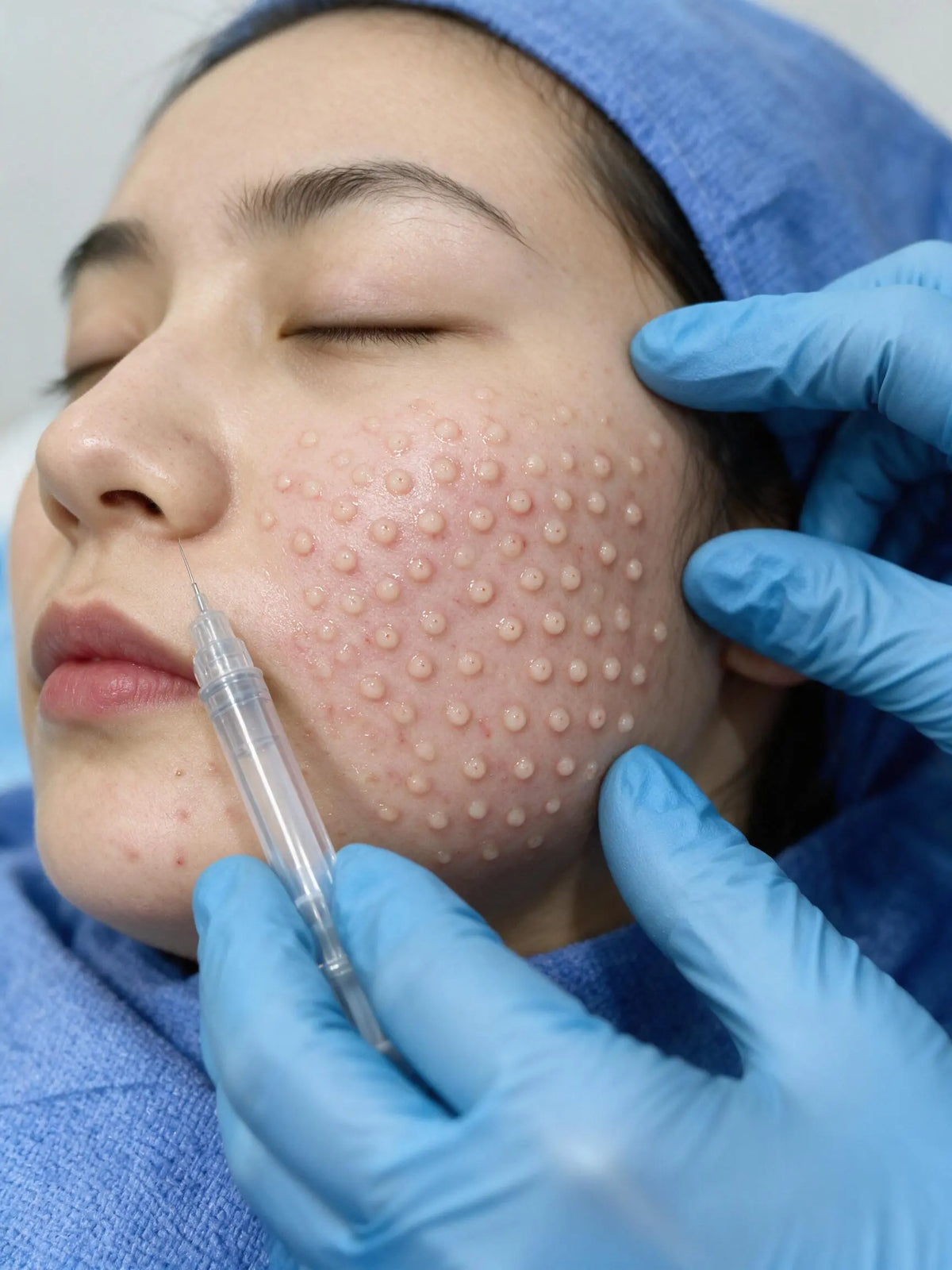
Why does it not work in our skincare?
As a rule of thumb, a molecule has to be under 500 daltons to get through the stratum corneum, the outermost layer of your skin, on its own. PDRN sits between 50,000 and 1,500,000. That's 100 to 3,000 times too large.
So when you apply a PDRN serum, it stays on the surface. The signal never arrives.
If salmon sperm doesnt work in my skincare, what does?
Every ingredient on this page has to answer the same question PDRN failed: can it reach the place where it is supposed to work?
There are only two honest ways to pass. Either the molecule is small enough to get through. Or it does not need to get through at all, because the job is on the surface.
1. Centella asiatica (flower extraction)
Centella Asiatica Extract. The most famous K-beauty ingredient for irritated skin is itself a plant. Also sold as cica, tiger grass or gotu kola.
Fun fact: It is not Korean. It comes from South and Southeast Asia and has a long history in Ayurveda and traditional Chinese medicine. In France it has been the basis of a wound-healing preparation for decades.
2. Nopal Extrakt (extract of the cactus)
Opuntia Ficus-Indica Stem Extract is the one whose studies were done on healthy skin. It binds water and lays a thin film on the skin, which strengthens the skin's own water-binding. That is exactly that promising mechaism that not needs to get into the skin to work.
It works where it lands: on the barrier.
3. Tepezcohuite (bark extraction of a tree)
Last but not least, Mimosa Tenuiflora Bark Extract. Like PDRN, it comes out of human medicine, and specifically out of open wounds: in controlled trials, a gel made from the bark extract helped leg ulcers close faster.
Its main active fraction is condensed tannins. They are astringent and film-forming, which means they work at the surface, not below it. They are large molecules and they do not need to get through your barrier to do their job. Alongside them sit arabinogalactans, long-chain sugars for which fibroblast stimulation has been described in cell culture.
Learn more about the plant extracts

Opuntia Ficus-Indica Stem Extract
Barbary Fig Stem Extract
Barbary Fig Stem Extract

Mimosa Tenuiflora Bark Extract
Tepezcohuite Bark Extract
Tepezcohuite Bark Extract

Aloe Barbadensis Leaf Extract
Aloe Vera Leaf Extract
Aloe Vera Leaf Extract

Opuntia Ficus-Indica Fruit Extract
Prickly Pear Fruit Extract
Prickly Pear Fruit Extract

Agave Tequilana Stem Extract
Agave Stem Extract
Agave Stem Extract

Pachyrhisus Erosus Root Extract
Jícama Root Extract
Jícama Root Extract

Mimosa Tenuiflora Bark Powder
Tepezcohuite Bark Powder
Tepezcohuite Bark Powder

Calendula Officinalis Flower Extract
Calendula Flower Extract
Calendula Flower Extract
The plant combination that boosts your glow
Why a combination of different plant extracts help your skin best
Ageing skin loses on two fronts at once. It holds less water, and it lets the water it has escape faster. Two different problems, so we use different plants for each.
Cactus and aloe hold the water. They bind it in the upper layers and leave a thin film that slows evaporation. They do that better next to humectants like plant glycerin and natural hyaluronic acid than they do on their own, which is why they never appear on their own in our formulas. Prickly pear fruit extract works on the same layer and adds antioxidants and betalains.
Tepezcohuite works on top of that. Its condensed tannins bind to proteins in the outermost layer and draw them together, so the surface feels tighter and looks more even.
And that's exactly why these plant extracts need each other for best results. Tannins tighten, but on their own they can leave skin feeling drawn. Water-binding sugars and hyaluronic acid do the opposite. Together, each covers the other's weak side and help the skin regenerate and look plump and healthy.
That's the formulation logic behind our bestsellers:
Routine bundle
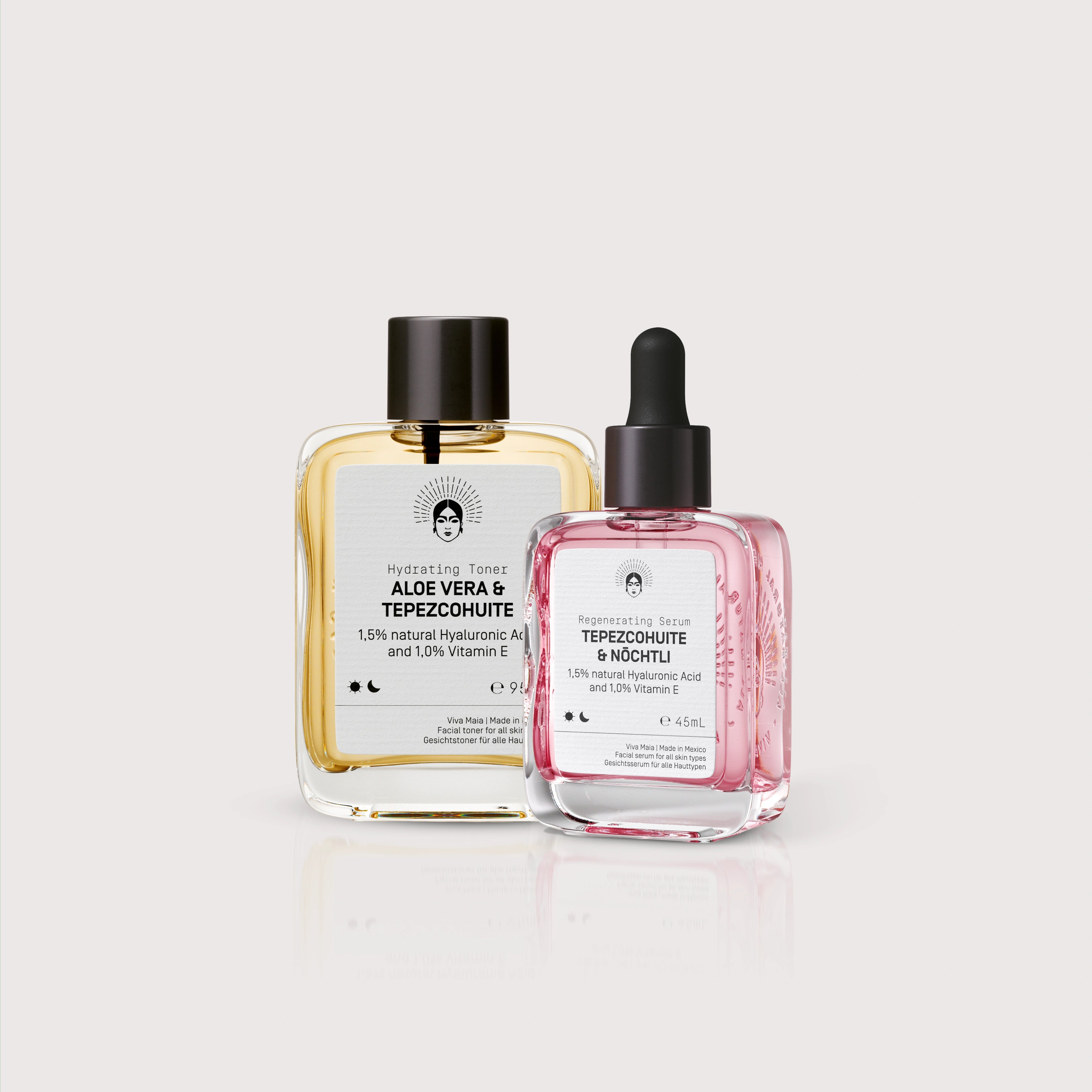

Skin Refining Duo - Tepezcohuite
Sale price66,90 €
Regular price74,80 €
Steps 04→05 • 2 items
Toner
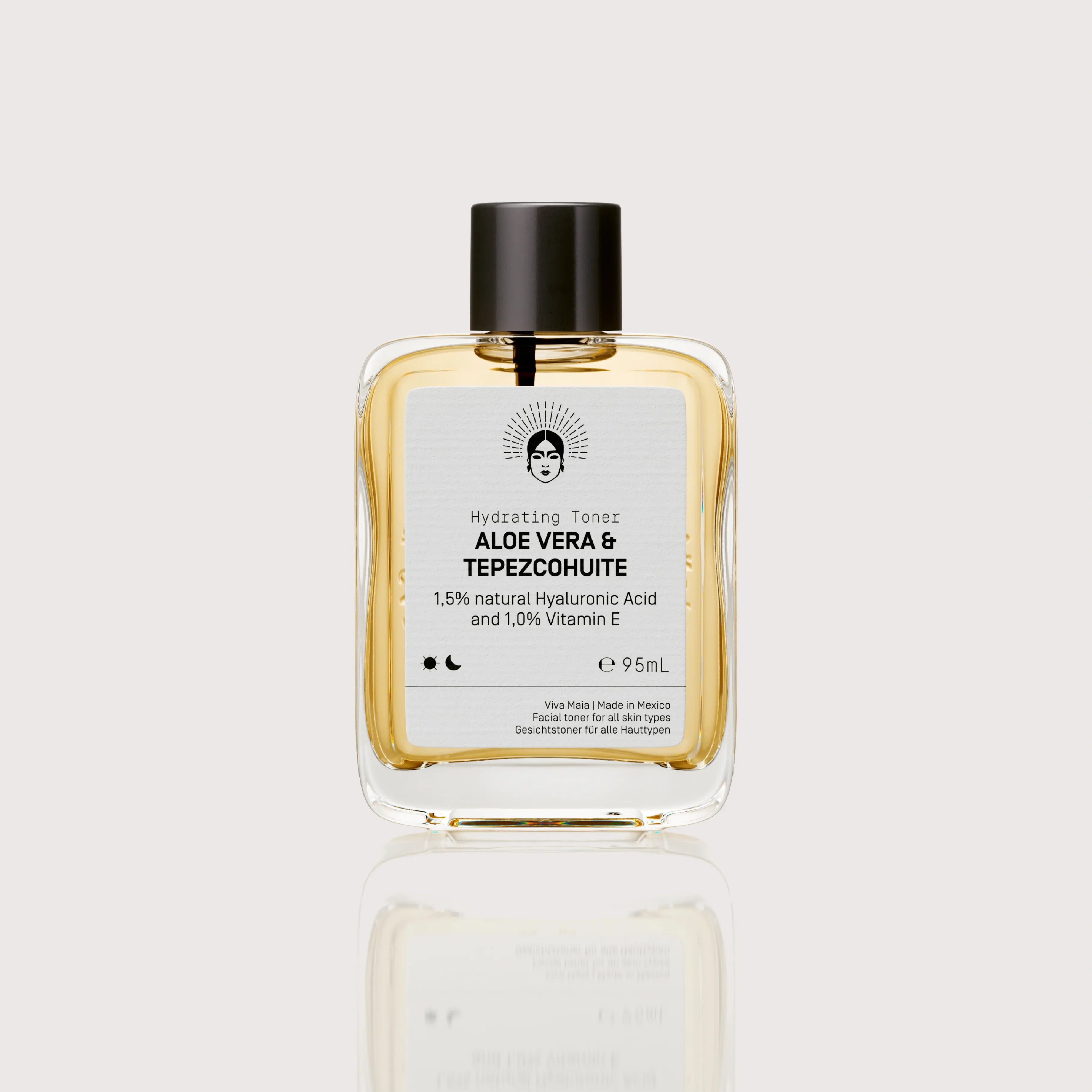

Hydrating Toner - Aloe Vera & Tepezcohuite
Sale price24,90 €
Step 04: Tone • 95mL
Routine bundle


Skin Refining Routine
Sale priceFrom 100,90 €
Regular price114,70 €
Steps 04→07 • 3/4 items
Special bundle
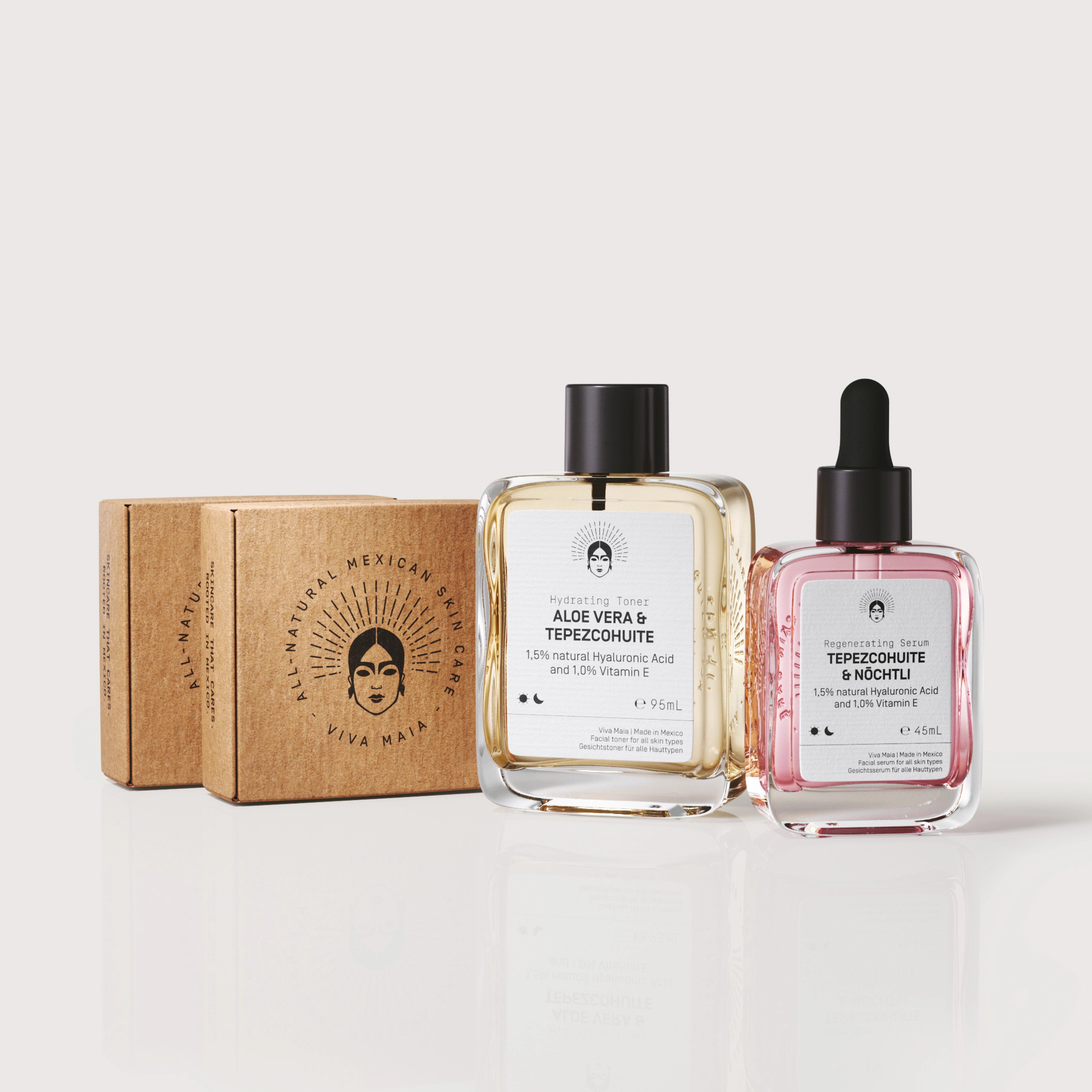
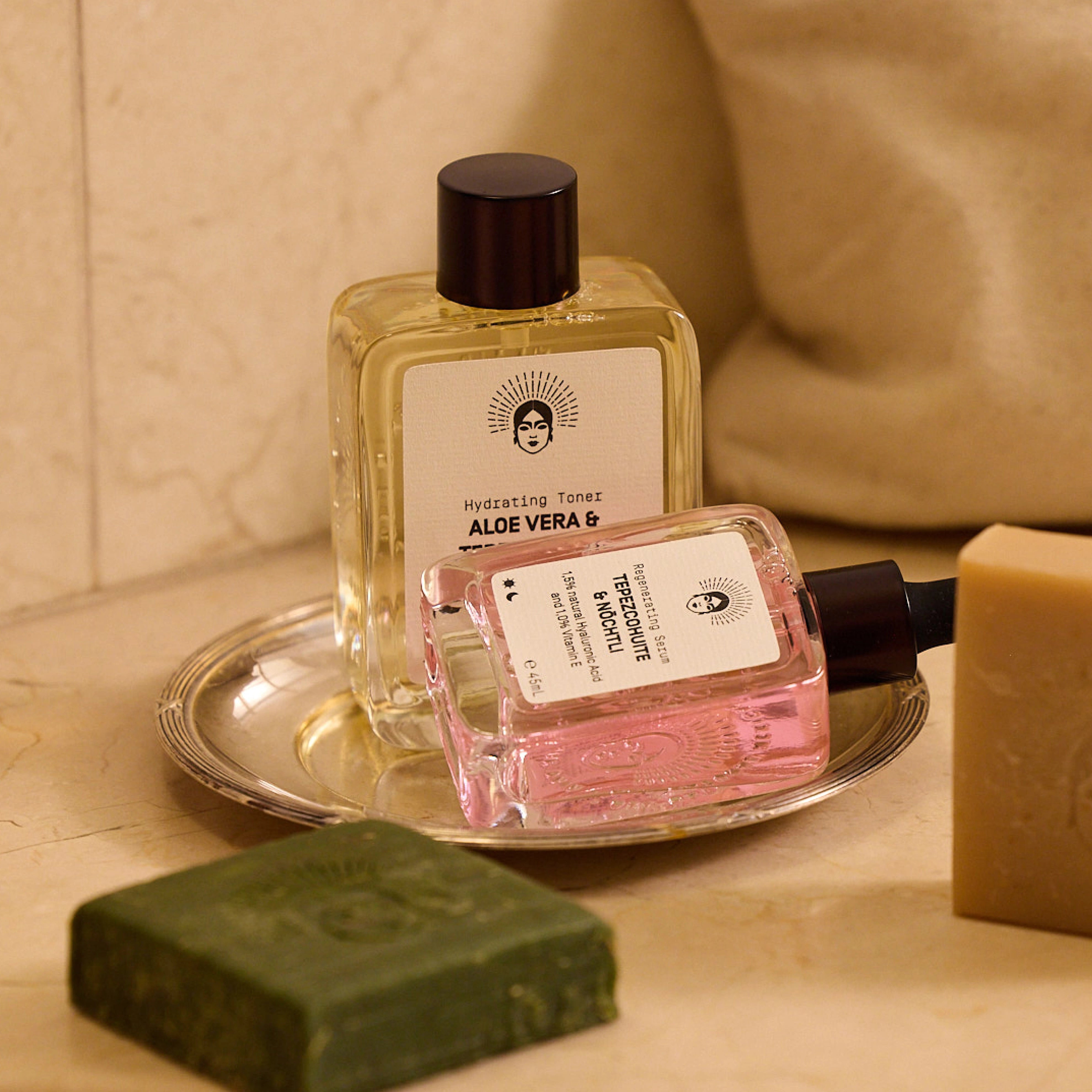
Mexican Skincare Bestseller
Sale priceFrom 99,90 €
Regular price114,60 €
Steps 01→02 & 04→05 • 4/5 items
Routine bundle

Harmony Routine
Sale price132,90 €
Regular price154,50 €
Steps 01→02 & 04→06 • 5 items


Regenerating Serum - Tepezcohuite & Nōchtli
Sale priceFrom 27,90 €
(110,89 €/100mL)
Step 05: Treat • 45mL
References
Sources are listed in the order the claims appear in the article.
Studies & References of this article
Sources are listed in the order the claims appear in the article. Numbers correspond to the superscript markers in the text.
1. Composition and origin of PDRN. Marques C, Porcello A, Cerrano M, Hadjab F, Chemali M, Lourenço K, Hadjab B, Raffoul W, Applegate LA, Laurent AE. From polydeoxyribonucleotides (PDRNs) to polynucleotides (PNs): bridging the gap between scientific definitions, molecular insights, and clinical applications of multifunctional biomolecules. Biomolecules. 2025;15(1):148. doi:10.3390/biom15010148 Narrative review. Describes PDRN as DNA fragments obtained from salmon and trout milt and purified to remove proteins, peptides and lipids.
2. Pharmaceutical origin of PDRN. Tonello G, Daglio M, Zaccarelli N, Sottofattori E, Mazzei M, Balbi A. Characterization and quantitation of the active polynucleotide fraction (PDRN) from human placenta, a tissue repair stimulating agent. Journal of Pharmaceutical and Biomedical Analysis. 1996;14(11):1555–1560. PMID:8877863 Analytical characterisation of the human-placenta-derived polynucleotide fraction used in Placentex (Mastelli, Sanremo, Italy; authorised 1994 for dystrophic and ulcerative connective-tissue disorders). The subsequent change of raw material to salmon and trout milt is documented in reference 1.
3. Introduction of injectable polynucleotides in Korea. Arora G. Polynucleotides and polydeoxyribonucleotides in dermatology: a narrative review. Journal of Cutaneous and Aesthetic Surgery. 2025;19(1):17–28. doi:10.25259/JCAS_65_2025 The 2014 date derives from a single unreferenced statement in this review. No regulatory or manufacturer documentation confirming it was identified.
4. Mechanism of action. Squadrito F, Bitto A, Irrera N, Pizzino G, Pallio G, Minutoli L, Altavilla D. Pharmacological activity and clinical use of PDRN. Frontiers in Pharmacology. 2017;8:224. doi:10.3389/fphar.2017.00224 (corrigendum 2022). PMID:28491036 PDRN acts principally through the adenosine A2A receptor. Fibroblast proliferation in culture is abolished by an A2A antagonist, and VEGF-mediated angiogenesis is demonstrated in a diabetic wound model. Evidence is in vitro and in animal models; effects on collagen and elastin in human skin are inferred rather than measured.
5. Route of administration in the clinical evidence base. Lampridou S, Bassett S, Cavallini M, Christopoulos G. The effectiveness of polynucleotides in esthetic medicine: a systematic review. Journal of Cosmetic Dermatology. 2025;24(2):e16721. doi:10.1111/jocd.16721. PMID:39645667 Systematic review of polynucleotide use in aesthetic medicine. The included trials use intradermal injection and are small and methodologically heterogeneous. Qualitative synthesis; no pooled effect estimates.
6. Molecular size limit for percutaneous absorption. Bos JD, Meinardi MMHM. The 500 Dalton rule for the skin penetration of chemical compounds and drugs. Experimental Dermatology. 2000;9(3):165–169. doi:10.1034/j.1600-0625.2000.009003165.x. PMID:10839713 Establishes the widely applied heuristic that compounds above approximately 500 Da do not passively cross intact stratum corneum. Theoretical analysis rather than an experimental study.
7. Molecular weight of PDRN. See references 1 and 3. Both report a range of approximately 50 to 1,500 kDa. The figure is repeated across reviews rather than traced to a single original determination and should be read as a working convention.
8. Centella asiatica: botanical origin, traditional use and pharmaceutical application. European Medicines Agency, Committee on Herbal Medicinal Products. Assessment report on Centella asiatica (L.) Urb., herba. EMA/HMPC/489140/2020, Rev. 1. Amsterdam: EMA; adopted 30 March 2022. Regulatory assessment documenting the species' South and Southeast Asian distribution, approximately two millennia of use in traditional Chinese medicine, its Ayurvedic use as mandukaparni, and Madecassol, a titrated Centella extract dressing authorised in France since 1976 for granulating wounds and cutaneous ulcers. Supporting mechanistic data: Maquart FX, Bellon G, Gillery P, Wegrowski Y, Borel JP. Stimulation of collagen synthesis in fibroblast cultures by a triterpene extracted from Centella asiatica. Connective Tissue Research. 1990;24(2):107–120. doi:10.3109/03008209009152427. In vitro, cultured human fibroblasts.
9. Opuntia ficus-indica stem extract on healthy skin. de Brito Damasceno GA, da Costa Silva RMA, Fernandes JM, Ostrosky EA, Zucolotto Langassner SM, Ferrari M. Use of Opuntia ficus-indica (L.) Mill extracts from Brazilian Caatinga as an alternative of natural moisturizer in cosmetic formulations. Brazilian Journal of Pharmaceutical Sciences. 2016;52(3). doi:10.1590/s1984-82502016000300012 Instrumental study in 12 healthy volunteers using corneometry and transepidermal water loss. A 3% extract increased stratum corneum hydration and reduced water loss over four to five hours. Small sample, short observation period. Characterisation of the surface-active fraction: Mukaila YO, Adeyemi JO, Fawole OA. Towards sustainable biopolymer innovation: a review of Opuntia ficus-indica mucilage. Processes. 2025;13(12):3837. doi:10.3390/pr13123837. Describes the mucilage as a high-molecular-weight heteropolysaccharide with water-holding and film-forming properties.
10. Mimosa tenuiflora bark extract. Rivera-Arce E, Chávez-Soto MA, Herrera-Arellano A, Arzate S, Agüero J, Feria-Romero IA, Cruz-Guzmán A, Lozoya X. Therapeutic effectiveness of a Mimosa tenuiflora cortex extract in venous leg ulceration treatment. Journal of Ethnopharmacology. 2007;109(3):523–528. doi:10.1016/j.jep.2006.08.032. PMID:17088036 Randomised, double-blind, placebo-controlled trial in 40 ambulatory patients over 13 weeks. Nineteen of 20 treated ulcers reached at least 80% closure, compared with one of 20 in the control arm. A later comparative trial of a reformulated extract did not reproduce a significant between-group difference: Lammoglia-Ordiales L, Vega-Memije ME, Herrera-Arellano A, et al. A randomised comparative trial on the use of a hydrogel with tepescohuite extract (Mimosa tenuiflora cortex extract-2G) in the treatment of venous leg ulcers. International Wound Journal. 2012;9(4):412–418. PMID:22128789 Condensed tannins as the dominant bark fraction: Hernandez C, Cadenillas L, El Maghubi A, Caceres I, Durrieu V, Mathieu C, Bailly JD. Mimosa tenuiflora aqueous extract: role of condensed tannins in anti-aflatoxin B1 activity in Aspergillus flavus. Toxins. 2021;13(6):391. doi:10.3390/toxins13060391 Arabinogalactans and dermal fibroblast activity: Zippel J, Deters A, Hensel A. Arabinogalactans from Mimosa tenuiflora (Willd.) Poiret bark as active principles for wound-healing properties: specific enhancement of dermal fibroblast activity and minor influence on HaCaT keratinocytes. Journal of Ethnopharmacology. 2009;124(3):391–396. PMID:19505559. Cell culture only.
11. Testing on the finished formulas of Viva Maia. Dermatest GmbH, Münster. Application study ST-AT-2025-00061 (Regenerating Serum) and epicutaneous patch test ST-ET-2024-00020 (Hydrating Toner). The application study measured wrinkle depth instrumentally with PRIMOS CR on 10 of 20 participants, aged 40 to 65, over six weeks, with no placebo group. Dermatologically tested. Not a clinical trial within the meaning of medicinal products law.