

The main ingredient, that binds water and lays down as a film. That is the effect people buy snail mucin for.
KNOWLEDGE · The K-beauty hype around snail mucin
INGREDIENTS EXPLAINED
Is the K-beauty hype around snail mucin justified?
6 min read · 12 August 2026
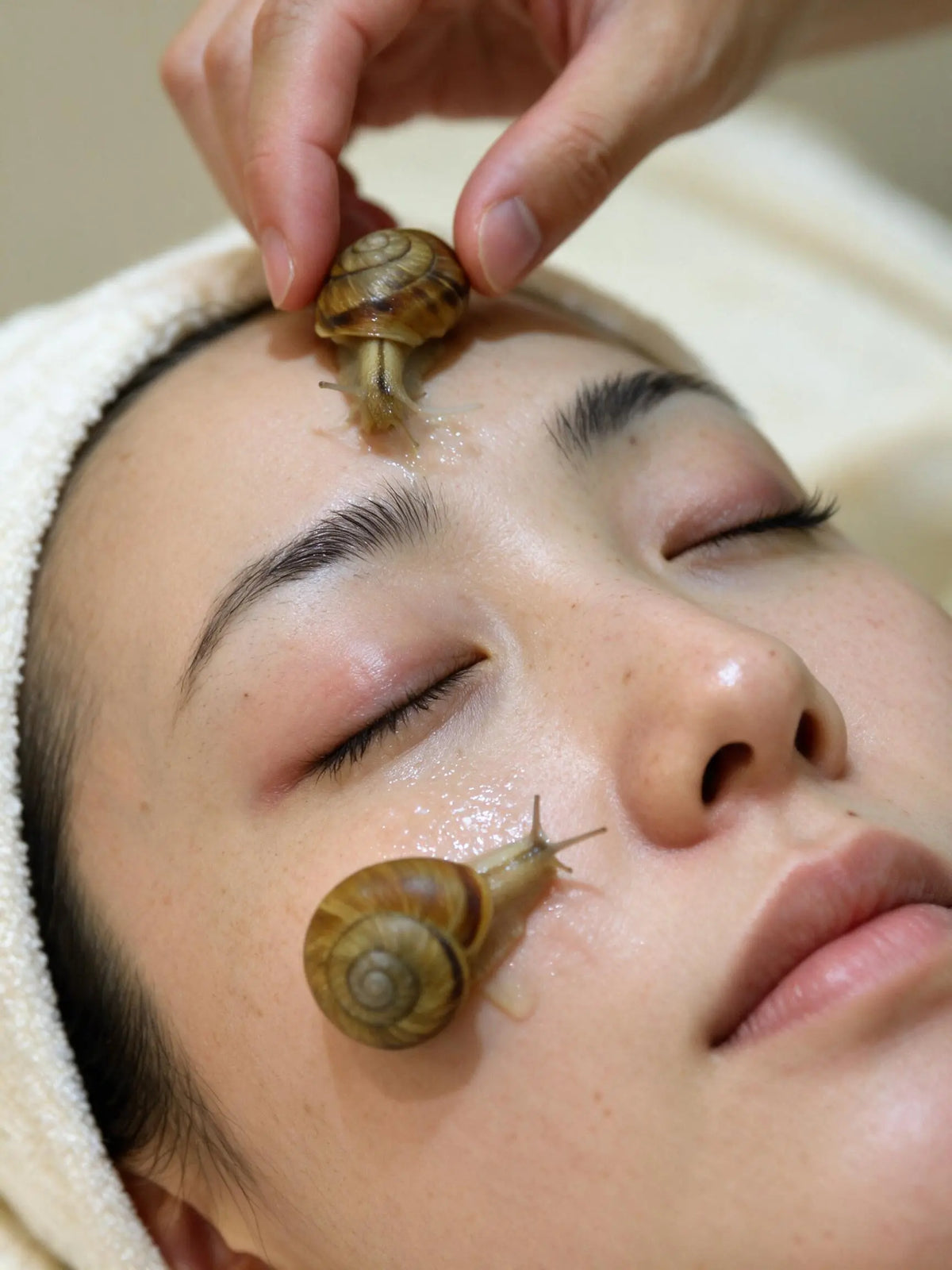
Do we really need a snail’s secretion for an intact barrier? The K-beauty active „snail mucin“ is everywhere on social media. But what is behind the hype? What does snail secretion actually do on our skin? And what kind of plant-based alternatives are out there?
WHAT IT IS AND HOW IT WORKS
What exactly is snail mucin?
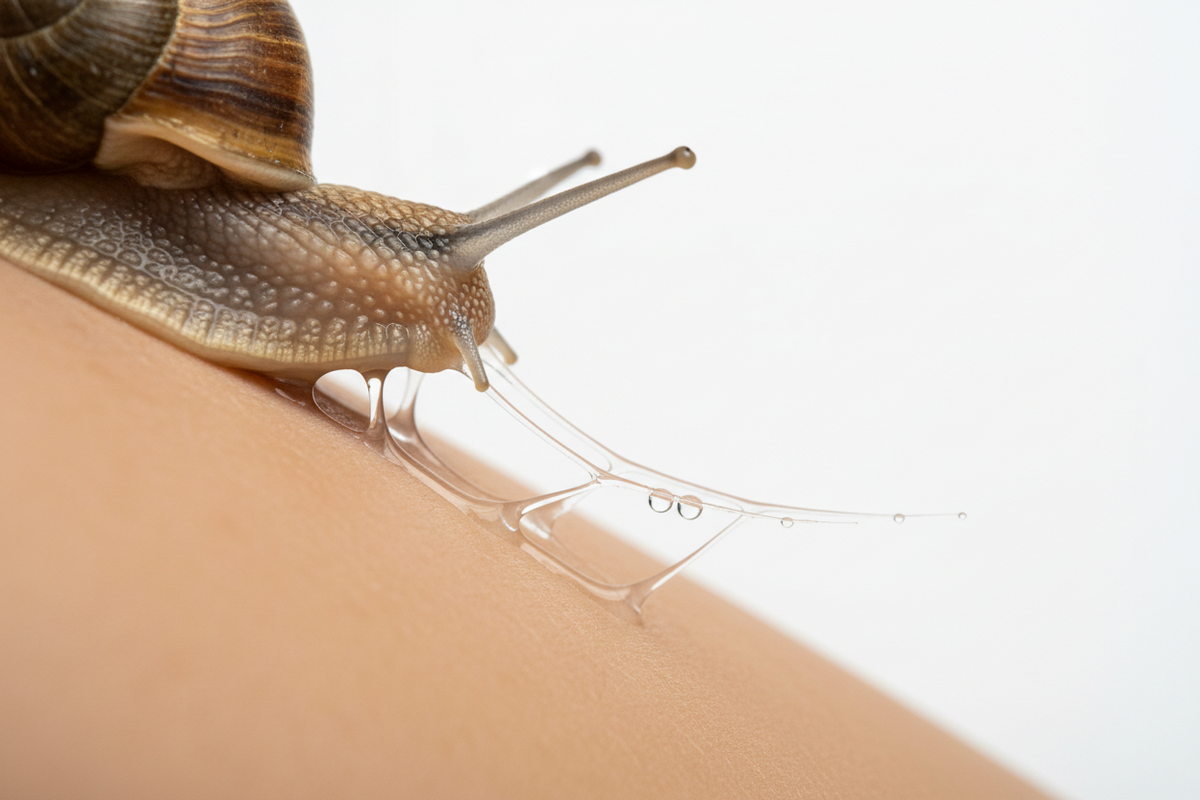
Snail mucin: it is not a single active but a mixture. It contains:
Glycoproteins
Hyaluronic acid
Binds water and keeps the skin hydrated.
Allantoin
Makes the skin surface feel softer.
Also present in small traces:
Glycolic acid, antimicrobial peptides, zinc.
Given the small amounts, these have no effect on the skin. Composition also varies considerably by snail species, husbandry, harvesting and processing.
I don't want snail mucin on my face, are there alternatives?
To answer that question we need to check what snail mucin does. We know now what it contains. All of the ingredients that are inside there have an effect on the skin surface. None of its ingredients penetrate the skin. That is exactly what makes it predictable.
It does two things. The large sugar molecules, glycosaminoglycans and glycoproteins, bind water and hold it in the uppermost layers of the skin. And they lay down a thin film that slows how quickly that water evaporates again. That is exactly what a stressed or irritated barrier needs: less water loss and some quiet.
So can we find this effect on the skin somewhere else?
Yes, we don't need an animal-derived raw material for a similar effect. Because everything snail mucin does happens at the skin surface, snail mucin is replaceable. Any substance that binds water and lays down a film can take on the same job. One of them grows in the deserts of Mexico.
Cactus a plant alternative that does the same job as snail mucin
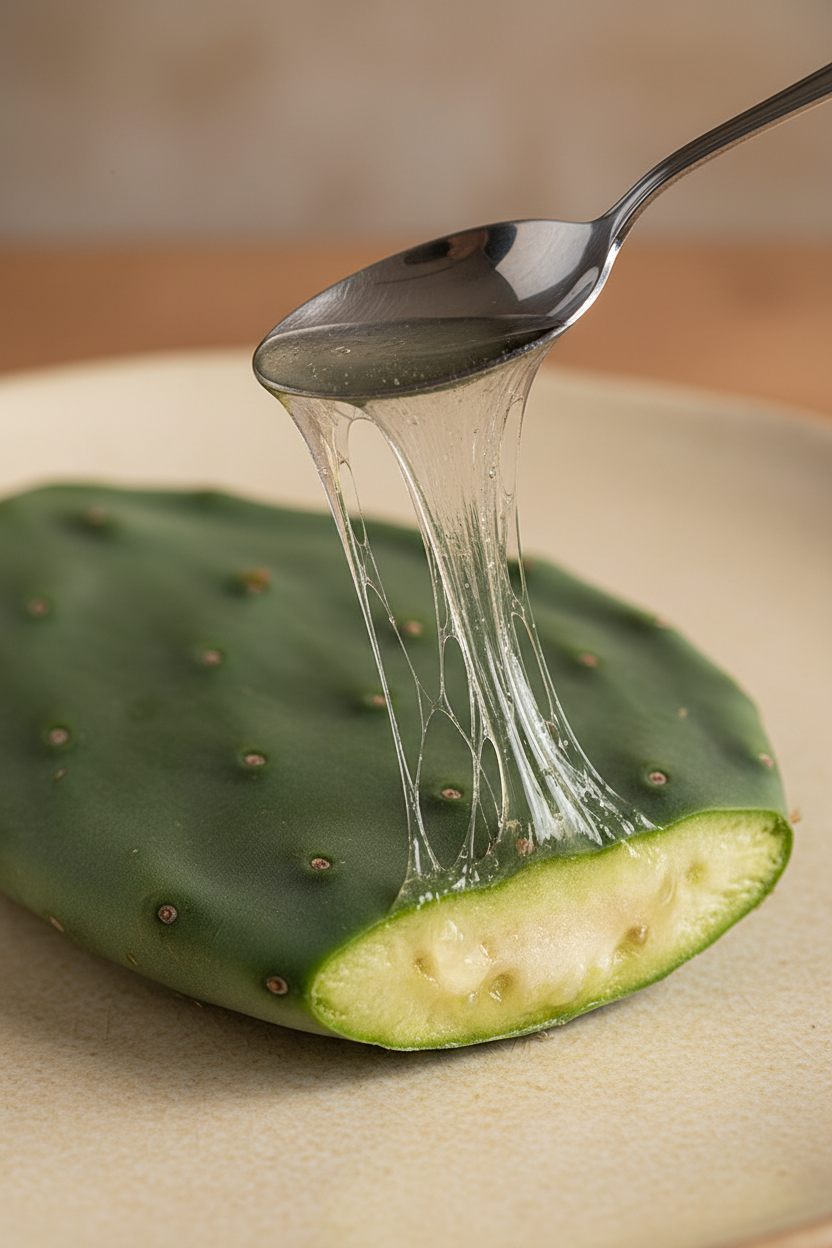
Like snail mucin, cactus mucilage is not a single active but a mixture. It contains:
Polysaccharides
Bind water and lay down a film. Exactly the effect people buy snail mucin for.
Galacturonic acid
Part of the same sugar chains, and it strengthens how well they hold water.
Betalains
Antioxidant plant pigments, characteristic of the cactus.
Also present in small traces:
Flavonoids, phenolic acids, vitamin C, minerals.
Given the small amounts, without an effect on the skin. Composition also varies considerably by plant age, season and processing.¹
Chemically, snail mucin and cactus mucilage are not identical. Snail mucin is built on amino sugars, cactus mucilage on plant sugars.
What they share is the principle: long sugar chains that bind water and lay down a film. For the job on your skin, that is exactly what counts.
How Cactus helps your skin.
Cactus mucilage is not a new discovery. It has been used in Latin American plant medicine for centuries, for skin and hair alike. So it is a well-known plant remedy has been used by thousands of people for centuries.
Research on cactus extracts and skin comes mostly from cell culture, animal models and small human studies on whole extracts rather than on isolated mucilage. The one effect that shows up consistently is hydration.² The film-forming and water-binding effect happens on the skin surface, and that part is chemistry we can predict rather than a claim we have to prove.
At UNAM, the largest university in Mexico, a group led by David Quintanar Guerrero has spent more than ten years developing nopal mucilage as a natural film former and humectant, with the aim of replacing synthetic ones. They found that mucilage combined with humectants such as glycerin holds water on the skin more effectively than either does alone, and they hold two patents on this work.³
We combine nopal mucilage with plant-derived glycerin in our formulations for exactly that reason.
There are several cactus mucins that help your barrier
„Cactus mucilage“ is an umbrella term, not a defined raw material. The genus Opuntia includes well over a hundred species, and other cacti form mucilage too. Which one is in the jar is something only the ingredient list tells you.

Opuntia Ficus-Indica Stem Extract
Barbary Fig Stem Extract
Barbary Fig Stem Extract

Aloe Barbadensis Leaf Extract
Aloe Vera Leaf Extract
Aloe Vera Leaf Extract

Opuntia Ficus-Indica Fruit Extract
Prickly Pear Fruit Extract
Prickly Pear Fruit Extract

Agave Tequilana Stem Extract
Agave Stem Extract
Agave Stem Extract

Pachyrhisus Erosus Root Extract
Jícama Root Extract
Jícama Root Extract
Aloe Vera has the most human studies & positive effects on skin

What you need to know
Aloe is not simply aloe
Nowadays with Aloe Vera there are a lot of different ways of getting it into your skincare product. One common one is reconstituted powder: the leaf gel is spray-dried and later stirred back into water. That is cheap, stable and practical, but not good for the plant components and long-chain sugars that matter for your skin.
WHAT YOU CAN LOOK FOR
Which aloe is declared?
Leaf Juice, Leaf Extract or Leaf Juice Powder
What you want to have
High-quality Aloe Barbadensis Leaf Extract, produced from fresh leaf material
rather than reconstituted powder.
Products with effective Cactus Extracts
Moisturiser


Radiating Cream - Jícama & Aloe Vera
Sale price39,90 €
Step 06: Moisturise • 80mL
Toner
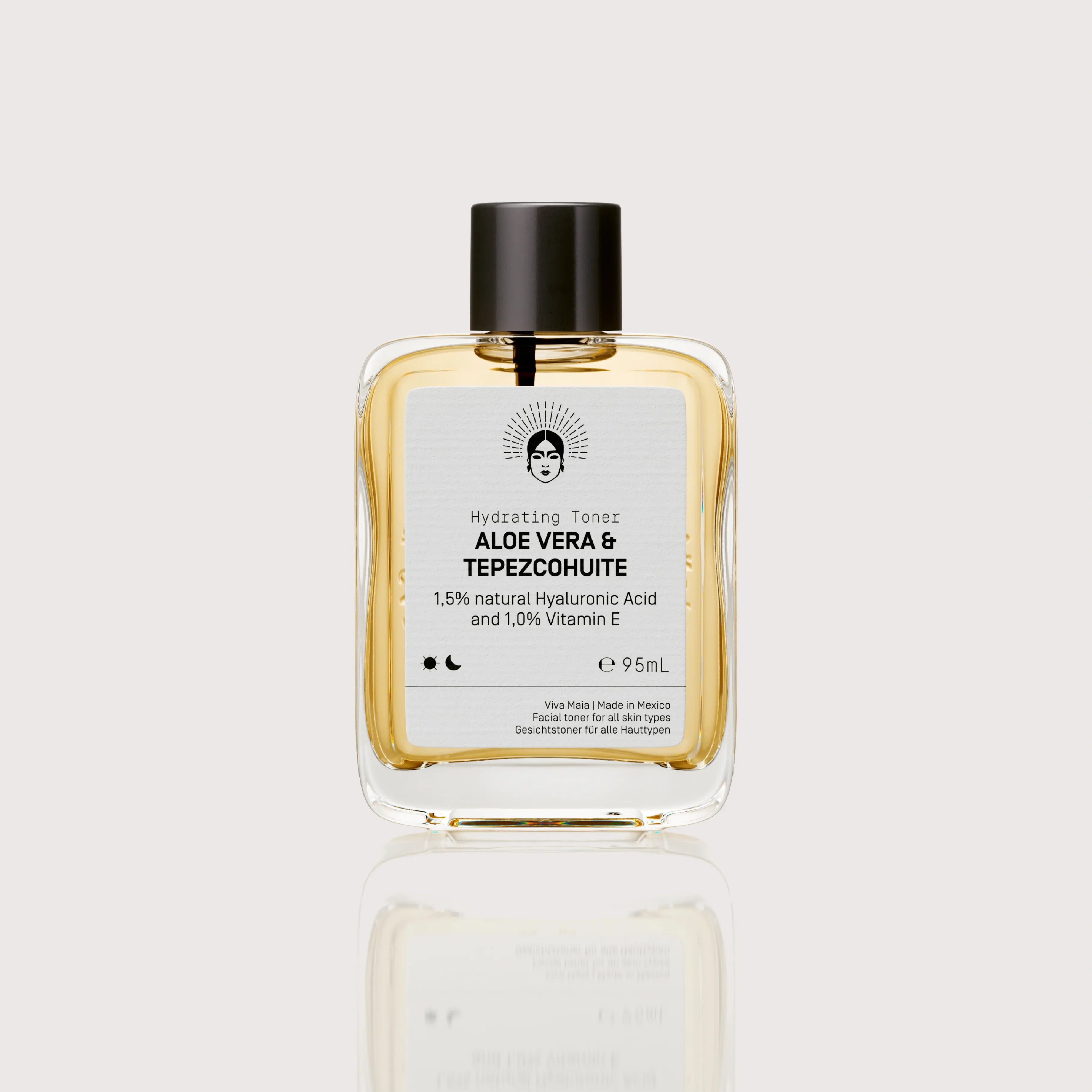
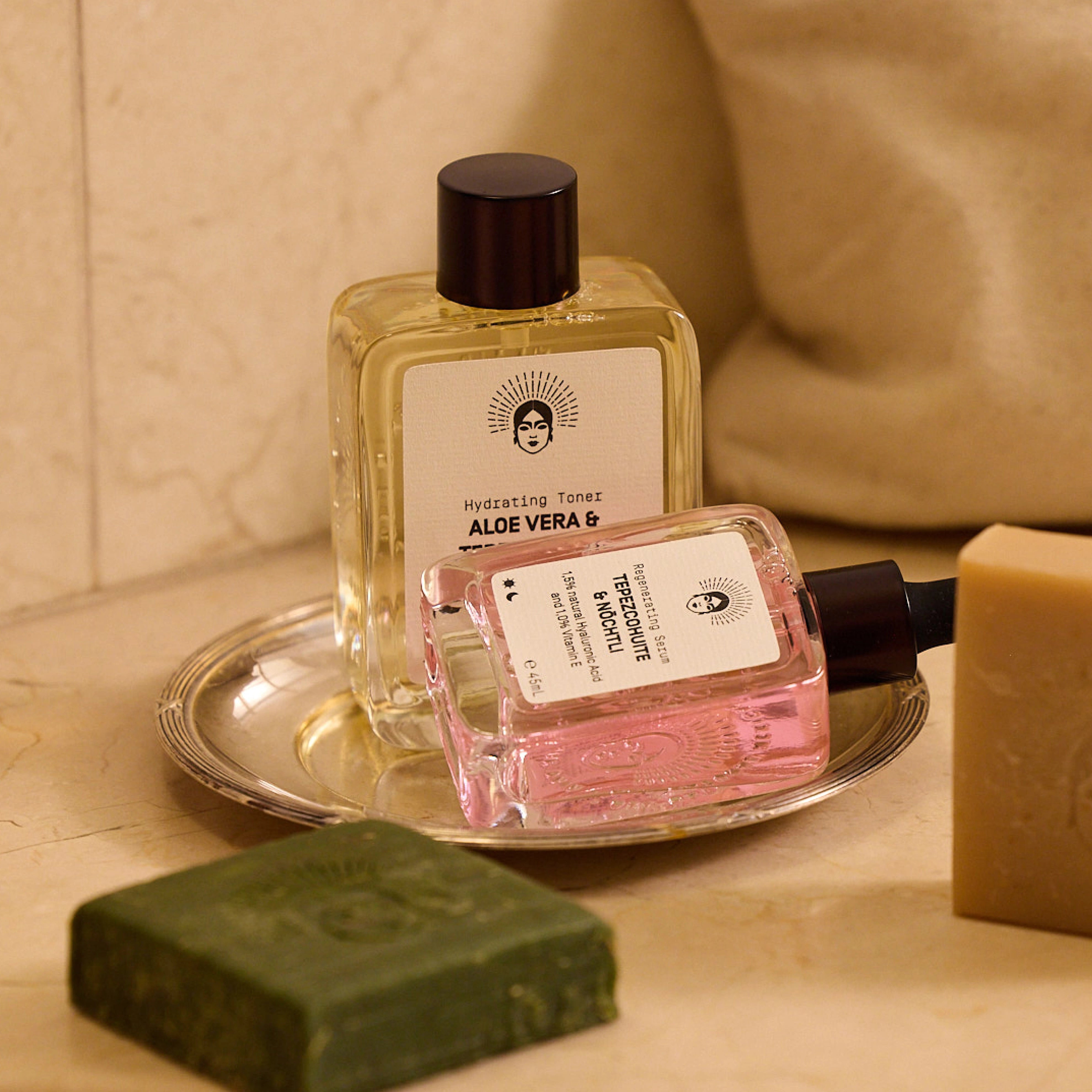
Hydrating Toner - Aloe Vera & Tepezcohuite
Sale price24,90 €
Step 04: Tone • 95mL
Toner
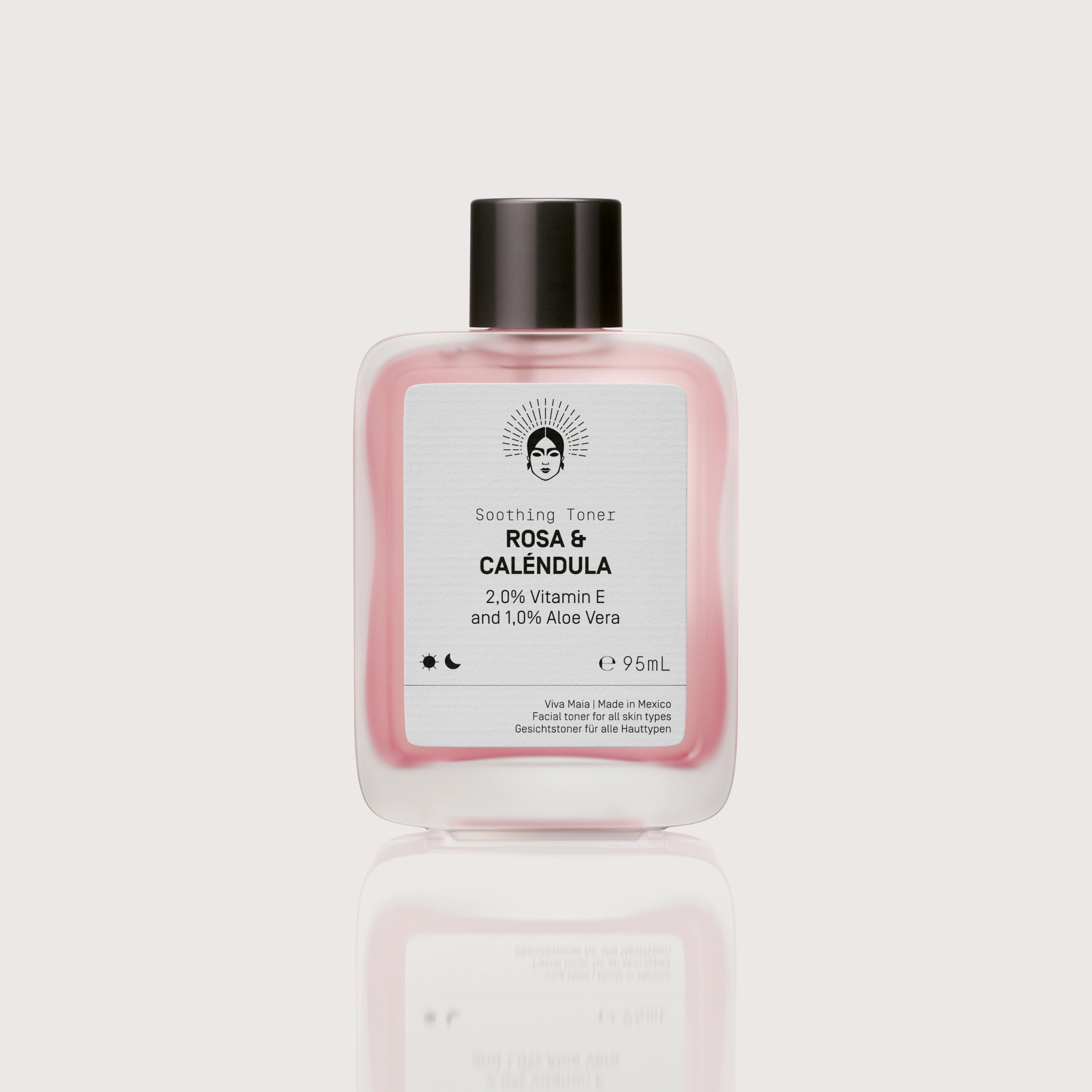
Soothing Toner - Rosa & Caléndula
Sale price29,90 €
Step 04: Tone • 95mL
Routine bundle
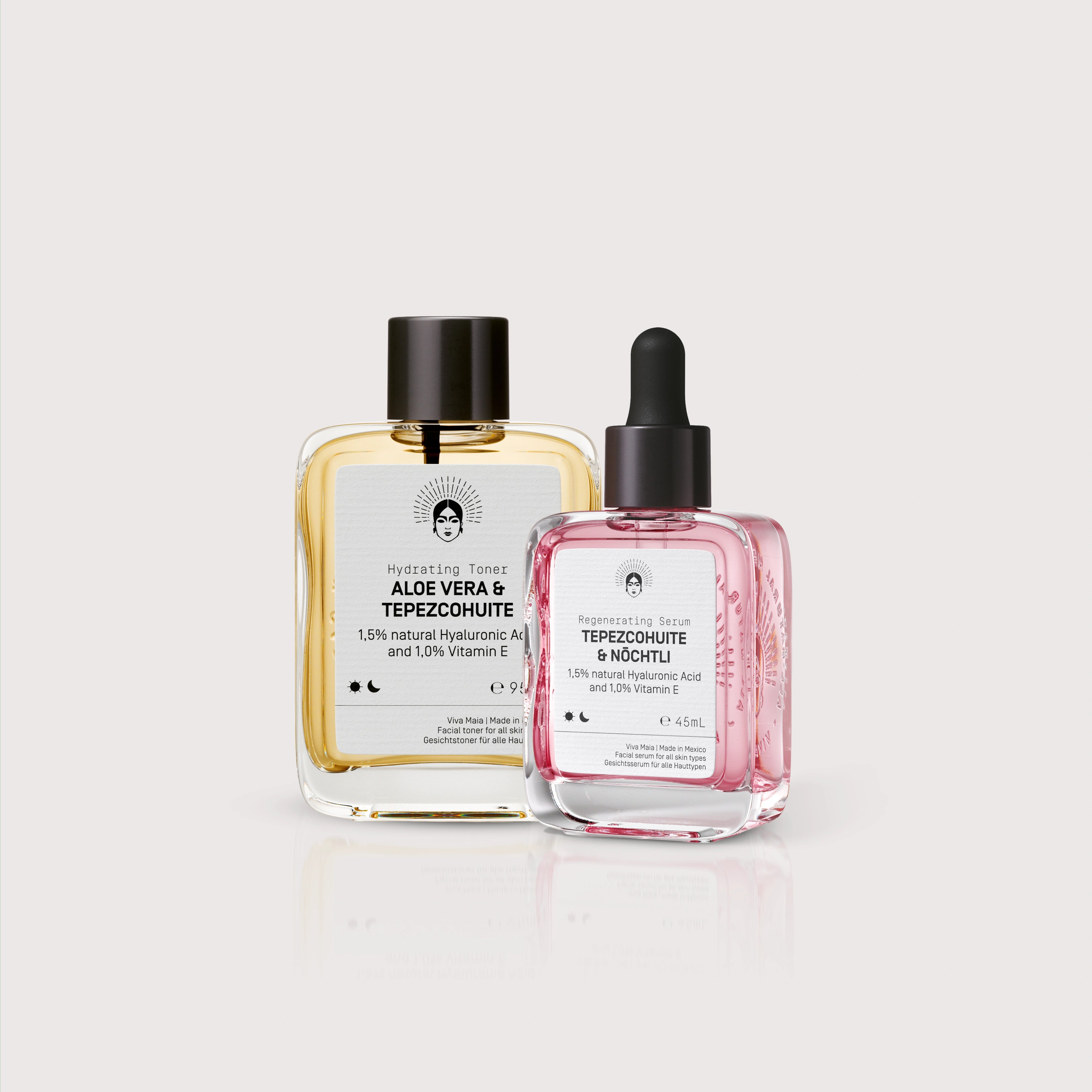

Skin Refining Duo - Tepezcohuite
Sale price66,90 €
Regular price74,80 €
Steps 04→05 • 2 items
Routine bundle

Skin Refining Routine
Sale priceFrom 100,90 €
Regular price114,70 €
Steps 04→07 • 3/4 items


Regenerating Serum - Tepezcohuite & Nōchtli
Sale priceFrom 27,90 €
(110,89 €/100mL)
Step 05: Treat • 45mL
The plant combination that boosts your glow
Holding water in your skin is only half the job
Cactus extracts and mucilages hold water. That is one job. Pairing them with other plant actives is what makes a formula do more than that.
Because when your skin is unbalanced holding water is only half the job.
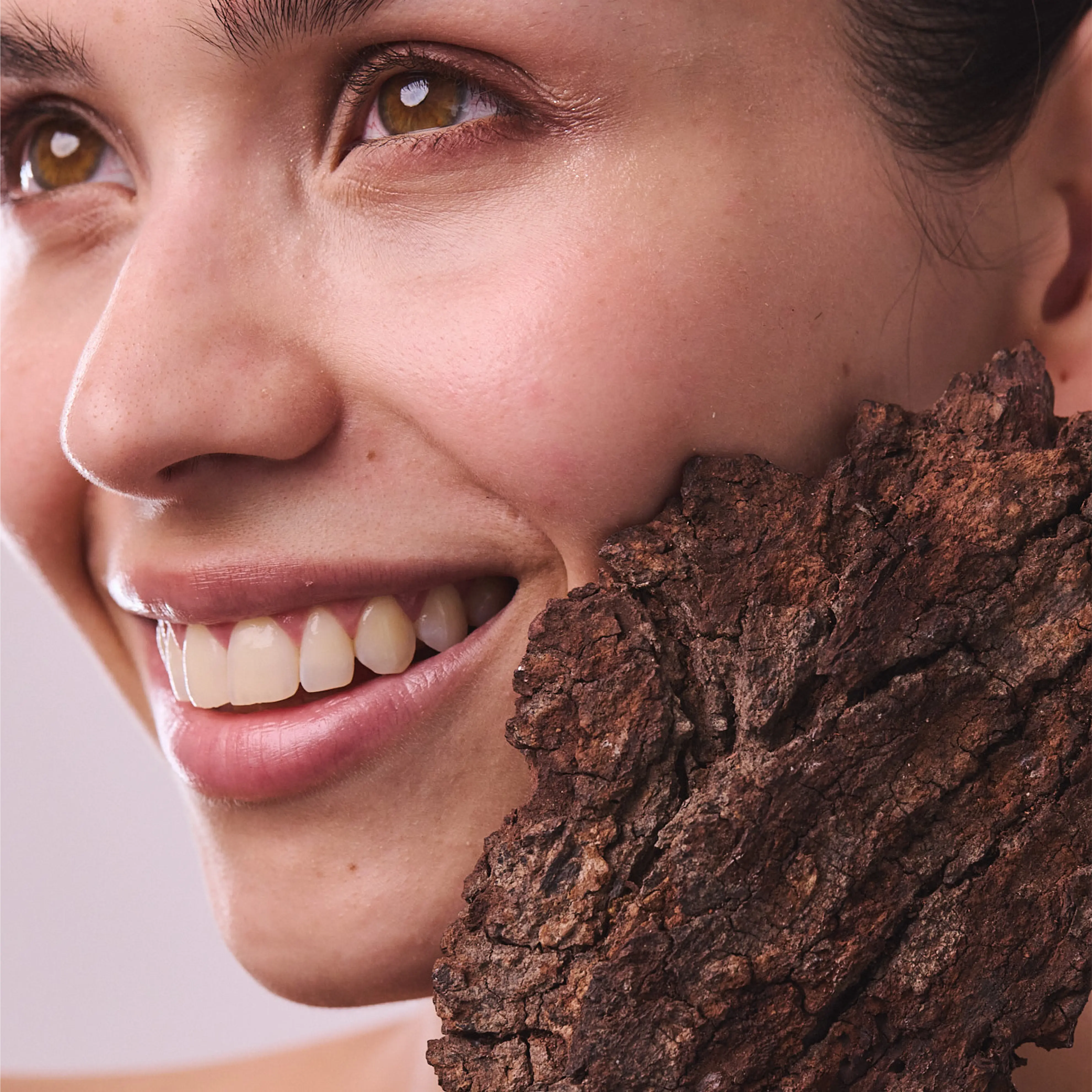
Tepezcohuite is not a mucilage. It does not bind water and it is not an alternative to snail mucin. It works through condensed tannins, which are astringent and film-forming, and through arabinogalactans, for which fibroblast stimulation has been described in cell culture.⁴
The bark comes from a tree in Chiapas and Oaxaca that Mexico calls the "skin tree".
In our formulas Tepezcohuite never stands alone. Both the Regenerating Serum and the Hydrating Toner combine it with high-quality prickly pear and aloe barbadensis leaf extracts, produced from fresh leaf material rather than reconstituted powder in Mexico. It's that finished formula that was tested dermatologically, for its effects, not a single ingredient.⁵
Our bestsellers
Our bestsellers combine cactus extracts and plant actives like Tepezcohuite.
Routine bundle
Skin Refining Duo - Tepezcohuite
Sale price66,90 €
Regular price74,80 €
Steps 04→05 • 2 items
Toner
Hydrating Toner - Aloe Vera & Tepezcohuite
Sale price24,90 €
Step 04: Tone • 95mL
Routine bundle
Skin Refining Routine
Sale priceFrom 100,90 €
Regular price114,70 €
Steps 04→07 • 3/4 items
Special bundle
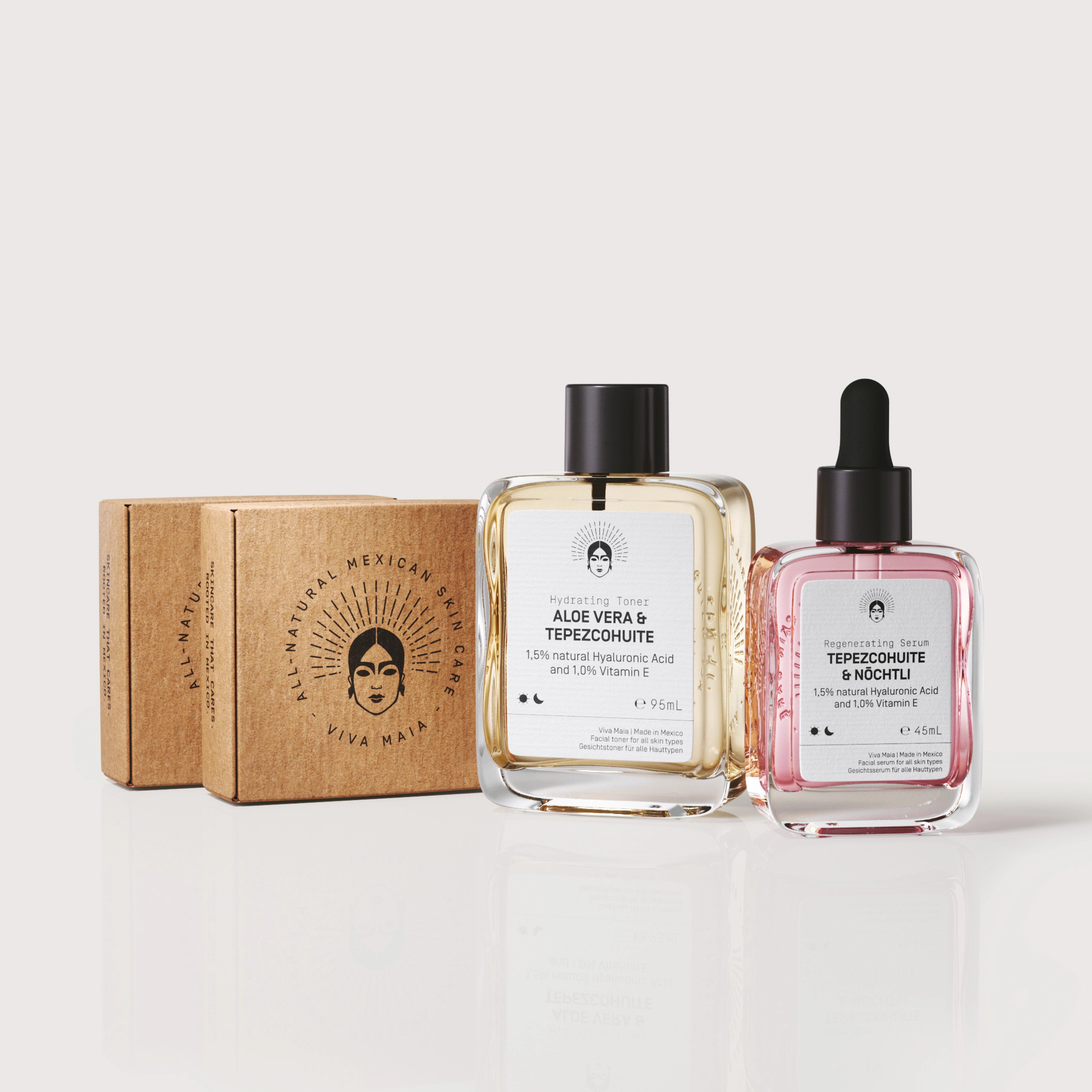
Mexican Skincare Bestseller
Sale priceFrom 99,90 €
Regular price114,60 €
Steps 01→02 & 04→05 • 4/5 items
Routine bundle

Harmony Routine
Sale price132,90 €
Regular price154,50 €
Steps 01→02 & 04→06 • 5 items
Regenerating Serum - Tepezcohuite & Nōchtli
Sale priceFrom 27,90 €
(110,89 €/100mL)
Step 05: Treat • 45mL
References
Skin hydration and barrier ¹
Damasceno GAB et al. Use of Opuntia ficus-indica (L.) Mill extracts from Brazilian Caatinga as an alternative natural moisturiser in cosmetic formulations. Corneometry and TEWL in human volunteers; increased hydration over five hours, attributed mainly to a barrier effect.
Production and Characterization of Cosmetic Nanoemulsions Containing Opuntia ficus-indica (L.) Mill Extract as Moisturizing Agent. Human study; statistically significant increase in hydration lasting five hours, with no significant change in transepidermal water loss.
Deters A et al. The polysaccharide and low molecular weight components of Opuntia ficus indica cladodes: structure and skin properties. Carbohydrate Polymers.
Nopal mucilage as a film former and humectant ²
Quintanar Guerrero D et al., Facultad de Estudios Superiores Cuautitlán, UNAM. Research programme on nopal mucilage as a natural humectant and film former, reporting a synergistic humectant effect in combination with glycerin or sorbitol. Reported in Gaceta UNAM and Fundación UNAM; university publication, not a peer-reviewed paper.
UNAM patent WO2015126232A1, 2015. Nopal mucilage as a controlled-release excipient; pharmaceutical application, since lapsed.
Further Opuntia research
Opuntia ficus-indica: chemical composition, antioxidant, sunscreen and DNA damage protection properties. Waste and Biomass Valorization, 2025.
Tepezcohuite
Zippel J, Deters A, Hensel A. Arabinogalactans from Mimosa tenuiflora (Willd.) Poiret bark as active principles for wound-healing properties. Journal of Ethnopharmacology, 2009;124(3):391–396. In vitro.
Phytopharmacological aspects of Mimosa tenuiflora: a systematic review of preclinical data. Phytochemistry Reviews, 2024.
Testing on the finished formulas of Viva Maia
Dermatest GmbH, Münster. Application study ST-AT-2025-00061 (Regenerating Serum) and epicutaneous patch test ST-ET-2024-00020 (Hydrating Toner).